


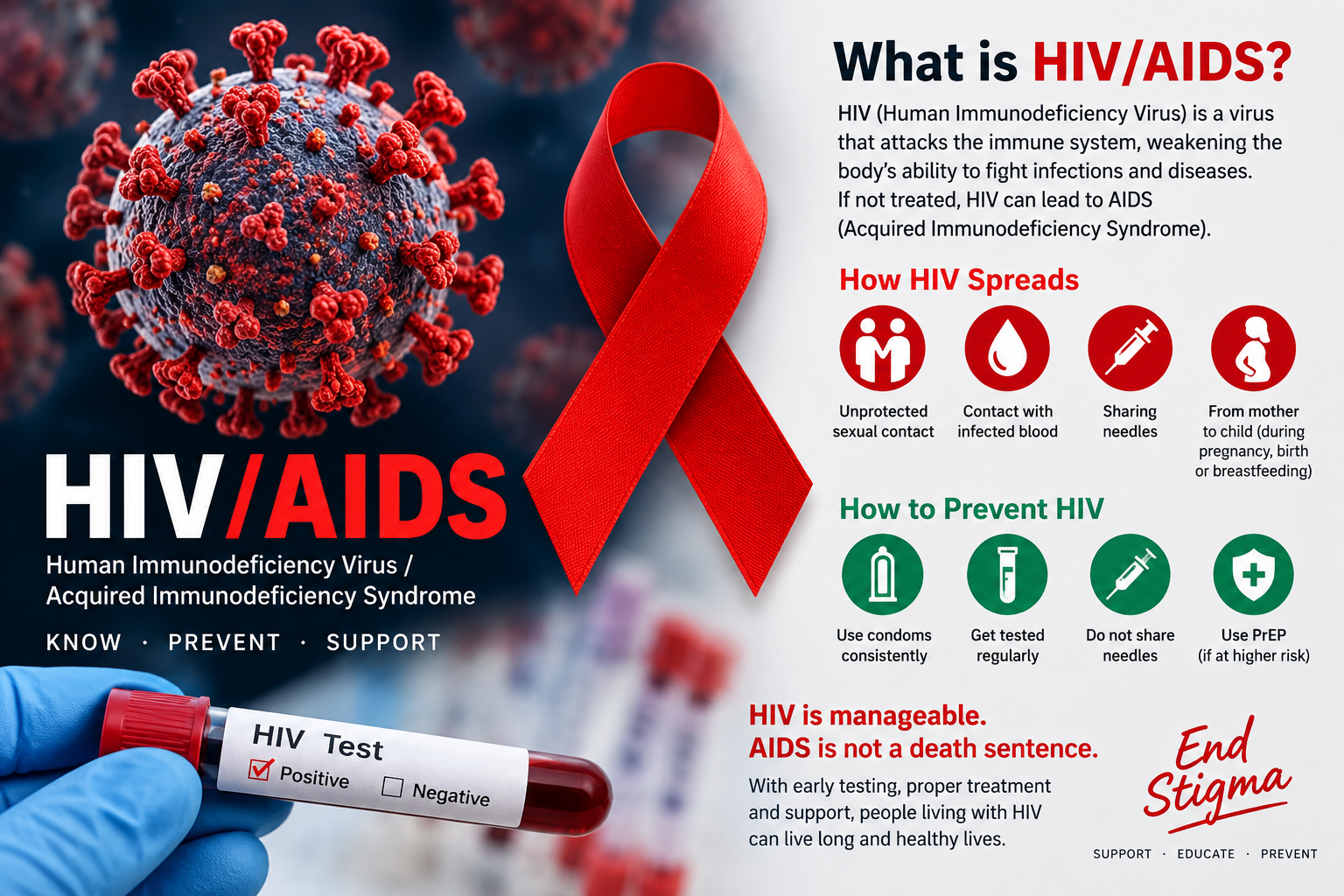
HIV AIDS is an important health topic that many people want to understand clearly. HIV is a virus that affects the immune system, while AIDS describes the most advanced stage of HIV infection. Although HIV does not currently have a cure that removes the virus from the body, modern treatment can control the infection and help people living with HIV maintain their health.
Learning the basic facts about HIV can help people understand how transmission occurs, recognize the importance of testing, learn about prevention methods, and understand why early medical care matters.
This guide explains HIV AIDS in simple language and focuses on reliable information rather than myths or unnecessary fear.
What Is HIV AIDS? 
The term HIV AIDS is commonly used when discussing HIV infection and AIDS together, but HIV and AIDS are not exactly the same thing.
HIV, or human immunodeficiency virus, is the virus that attacks cells of the immune system. Without effective treatment, HIV can gradually weaken the body’s ability to fight certain infections and illnesses.
AIDS, or acquired immunodeficiency syndrome, refers to the most advanced stage of HIV infection. A person with HIV does not automatically develop AIDS. Effective antiretroviral treatment can prevent or delay progression to advanced disease.
Understanding this difference is one of the most important starting points when learning about HIV.
How Does HIV Affect the Body?
HIV mainly targets immune cells called CD4 cells. These cells play an important role in helping the body respond to infections.
When HIV is not controlled, it can damage the immune system over time. This may increase a person’s vulnerability to infections and certain diseases.
Antiretroviral therapy, commonly called ART, works by preventing HIV from multiplying effectively. As treatment reduces the amount of virus in the body, the immune system can function better.
This is why medical care is an important part of managing HIV.
HIV AIDS Symptoms
Symptoms of HIV can vary from one person to another. Some people experience short-term symptoms after infection, while others may not notice anything unusual for a long period.
Early HIV infection can sometimes cause symptoms that resemble a common viral illness. Possible symptoms may include:
- Fever
- Sore throat
- Headache
- Skin rash
- Swollen lymph nodes
- Tiredness
However, these symptoms are not specific to HIV. Many other illnesses can cause similar problems.
As untreated HIV progresses, more serious health problems can occur because the immune system becomes weaker. WHO notes that advanced HIV disease can be associated with conditions such as tuberculosis, serious infections, and some cancers.
Why Symptoms Are Not Enough
A person cannot reliably determine their HIV status simply by looking at symptoms.
The only dependable way to know whether someone has HIV is through appropriate HIV testing.
If someone believes they may have been exposed to HIV, speaking with a qualified healthcare professional is more useful than trying to diagnose the infection from symptoms.
How Is HIV Transmitted?
HIV transmission occurs when certain body fluids containing the virus enter another person’s body.
These fluids can include:
- Blood
- Semen
- Vaginal fluids
- Breast milk
HIV can be transmitted through certain sexual exposures, sharing contaminated injection equipment, and from a mother to her baby during pregnancy, childbirth, or breastfeeding. Unsafe medical procedures involving contaminated equipment can also create transmission risks.
The exact level of risk depends on the type of exposure and whether prevention or treatment measures are being used.
How HIV Is Not Transmitted
One of the most important facts about HIV AIDS is that ordinary social contact does not spread HIV.
HIV is not transmitted through normal activities such as:
- Hugging
- Shaking hands
- Sharing food
- Sharing water
- Sitting near someone
- Ordinary social interaction
This information is important because misunderstanding HIV transmission can contribute to unnecessary fear and stigma.
People living with HIV should not be avoided because of ordinary everyday contact.
HIV AIDS Prevention
There are several ways to reduce the risk of HIV infection. No single method is necessarily appropriate for every situation, so people should choose prevention strategies based on their circumstances and, when appropriate, professional medical advice.
Use Condoms Correctly
Condoms can reduce the risk of HIV transmission during sexual activity and can also help reduce the risk of some other sexually transmitted infections.
Correct and consistent use is important.
Consider HIV Testing
Testing helps people understand their HIV status. It can also connect people who receive a positive result with treatment and healthcare services.
CDC states that testing is the only way to know a person’s HIV status.
Learn About PrEP
PrEP, or pre-exposure prophylaxis, is HIV-prevention medicine for people who do not have HIV but may have an increased chance of exposure.
PrEP can be available as pills or certain long-acting medicines, depending on local medical services and eligibility. A healthcare provider can explain which options are appropriate.
PrEP is specifically intended to reduce HIV risk; it does not replace all other sexual-health precautions.
Understand PEP
PEP, or post-exposure prophylaxis, is medication used after a possible HIV exposure.
PEP is time-sensitive, so someone who thinks they may have recently been exposed should seek medical attention promptly. A healthcare professional can determine whether PEP is appropriate.
Avoid Sharing Injection Equipment
Sharing needles, syringes, or other injection equipment can expose people to infected blood.
Using sterile equipment and appropriate harm-reduction services can lower the risk of HIV and other blood-borne infections.
HIV Testing
HIV testing is an important part of both prevention and healthcare.
Different types of HIV tests are available, including laboratory tests and certain rapid or self-testing options. The appropriate test and timing can depend on the situation.
A recent exposure may not immediately be detected by every type of test because tests have different detection windows. For this reason, people concerned about a recent exposure should ask a healthcare professional when testing should occur.
A positive screening result also requires appropriate follow-up according to the testing system being used.
For reliable information about testing, readers can consult the CDC HIV Testing resource.
HIV AIDS Treatment
There is currently no treatment that completely removes HIV from the body. However, antiretroviral therapy (ART) can control the virus.
ART works by reducing HIV replication and lowering the amount of virus in the blood, known as the viral load. Effective treatment can protect immune function and help people with HIV live long and healthy lives.
WHO recommends linking people diagnosed with HIV to antiretroviral treatment as soon as possible.
Treatment plans should be determined by qualified healthcare professionals because medicines, medical history, other health conditions, and individual circumstances can affect treatment decisions.
Why Taking Treatment Consistently Matters
HIV treatment works best when taken according to the prescribed plan.
Stopping or repeatedly missing treatment without medical guidance can allow HIV to increase in the body and may create additional treatment challenges.
Someone experiencing side effects, difficulty obtaining medication, or other problems should discuss the issue with their healthcare provider rather than stopping treatment independently.
Undetectable HIV and Transmission
An important development in HIV care is the relationship between effective treatment and viral suppression.
When HIV treatment reduces the viral load to an undetectable level and the person maintains that suppression, HIV is not sexually transmitted to their sexual partners. This is often expressed as U=U, meaning Undetectable equals Untransmittable.
Being undetectable does not mean HIV has been eliminated from the body. Continued treatment and medical monitoring remain important.
This is one reason why testing, early diagnosis, access to treatment, and continued care are important parts of HIV prevention.
HIV AIDS and Pregnancy
HIV can be transmitted from a mother to her baby during pregnancy, childbirth, or breastfeeding.
Medical care and antiretroviral treatment can substantially reduce the risk of transmission. WHO recommends that pregnant people living with HIV have access to and take appropriate ART as early as possible.
Pregnant people living with HIV should work with qualified healthcare professionals to develop an individualized treatment and infant-feeding plan based on current medical guidance and local services.
Living With HIV
An HIV diagnosis does not mean that a person’s life has to stop.
With effective treatment and ongoing medical care, many people living with HIV can maintain their health and live active lives. Treatment can reduce the amount of HIV in the body and help protect the immune system.
Support from healthcare professionals, family, friends, and appropriate community services can also help people manage the practical and emotional challenges that may accompany an HIV diagnosis.
Accurate information is particularly important because stigma can discourage people from seeking testing or medical care.
Common HIV AIDS Myths
Myth: HIV and AIDS are exactly the same
They are not. HIV is the virus, while AIDS describes advanced HIV infection.
Myth: You can identify HIV from appearance
You cannot reliably determine someone’s HIV status from their appearance. Testing is necessary.
Myth: HIV spreads through casual contact
Ordinary activities such as hugging, shaking hands, or sharing food do not transmit HIV.
Myth: HIV treatment means the virus has disappeared
Effective treatment can make the virus undetectable in the blood, but it does not mean HIV has been eliminated from the body. Continued treatment remains necessary.
Myth: HIV always progresses to AIDS
Effective treatment can prevent or delay progression to advanced HIV disease.
When Should You Seek Medical Advice?
People should consider speaking with a healthcare professional when they:
- Think they may have been exposed to HIV
- Want to receive an HIV test
- Have symptoms that concern them
- Receive a positive HIV test result
- Are considering PrEP
- May need PEP after a recent exposure
- Are living with HIV and have difficulty taking treatment
- Are pregnant and have HIV or may have been exposed
Medical advice is especially important after a recent possible exposure because some prevention options, such as PEP, are time-sensitive.
Frequently Asked Questions About HIV AIDS
1. What is the difference between HIV and AIDS?
HIV is a virus that attacks the immune system. AIDS is the most advanced stage of HIV infection. A person with HIV does not necessarily develop AIDS, particularly when effective treatment is available and taken as prescribed.
2. Can HIV be cured?
There is currently no widely available cure that eliminates HIV from the body. Antiretroviral treatment can control the virus, protect the immune system, and help people living with HIV maintain their health.
3. How can someone know if they have HIV?
The only reliable way to know a person’s HIV status is through appropriate HIV testing. Symptoms alone cannot confirm or rule out HIV.
4. Can someone with HIV live a healthy life?
Yes. Effective HIV treatment can suppress the virus and help people living with HIV maintain their health and live long lives. Regular medical care and following the prescribed treatment plan are important.
5. What should someone do after possible HIV exposure?
They should seek medical advice as soon as possible. Depending on the circumstances, PEP may be an option. Because PEP is time-sensitive, waiting for symptoms is not recommended.
Conclusion
HIV AIDS is a subject that is easier to understand when the basic facts are separated from common myths. HIV is a virus that affects the immune system, while AIDS refers to advanced HIV infection.
Today, HIV can be managed with antiretroviral therapy. Prevention methods such as condoms, testing, PrEP, PEP, and avoiding shared injection equipment can reduce the risk of infection. People who may have been exposed should seek professional medical advice rather than relying on symptoms or online self-diagnosis.
For current medical recommendations, readers should consult trusted organizations such as the World Health Organization and the Centers for Disease Control and Prevention, because medical guidance and available treatments can change over time.
Trusted External Resources
- World Health Organization — HIV and AIDS: https://www.who.int/news-room/fact-sheets/detail/hiv-aids
- WHO — HIV Health Topic: https://www.who.int/health-topics/hiv-aids
- CDC — About HIV: https://www.cdc.gov/hiv/about/
- CDC — HIV Testing: https://www.cdc.gov/hiv/testing/
- CDC — HIV Prevention: https://www.cdc.gov/hiv/prevention/
- CDC — PrEP: https://www.cdc.gov/hiv/prevention/prep.html
[…] Ladies and gentlemen, an important topic regarding HIV/AIDS is available here for you; if you are interested, please click the link to read it. https://kaskeymarketer.com/hiv-aids/ […]