


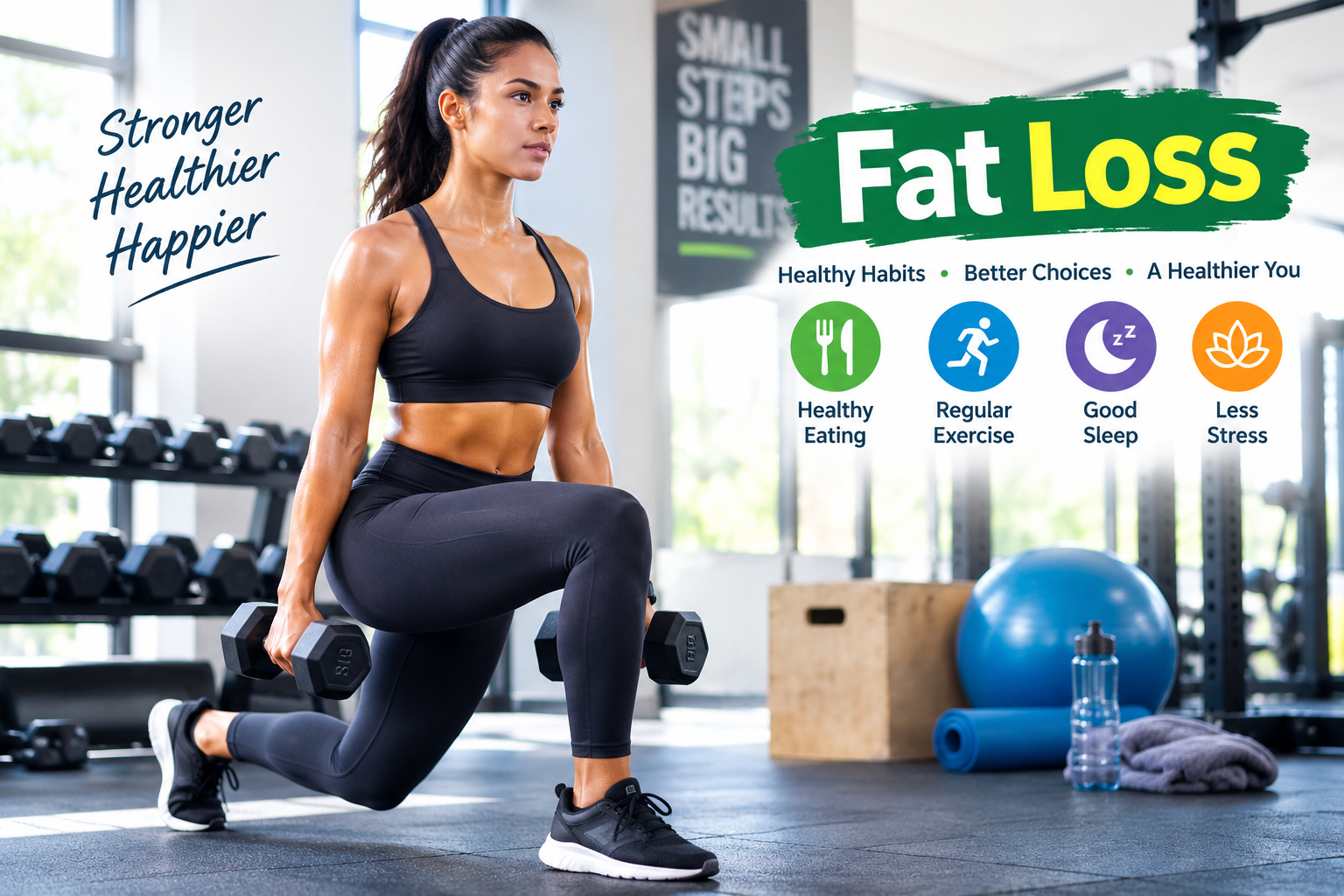
Fat loss is a common goal for people who want to improve their health, fitness, or overall well-being. However, reaching that goal does not require extreme diets, skipping meals, or spending hours exercising every day. A balanced approach can help you develop habits that are realistic and easier to maintain.
Healthy weight management generally involves nutritious food choices, regular physical activity, sufficient sleep, and consistent daily habits. Instead of looking for a quick solution, it is better to focus on changes that can become part of your normal lifestyle.
This guide explains practical ways to support healthy fat loss, common mistakes to avoid, and simple steps that beginners can use to create a sustainable routine.
What Is Fat Loss?
Fat loss refers to reducing stored body fat. Body weight can change for several reasons, including changes in body fat, muscle, water, and the contents of the digestive system.
For this reason, the number shown on a scale does not always provide a complete picture of your progress.
A sensible approach focuses on improving overall eating and activity habits rather than trying to make body weight change as quickly as possible.
Individual results can vary because factors such as age, activity level, sleep, medications, medical conditions, genetics, and eating habits can influence weight management.
How Does Fat Loss Work?
At a basic level, body weight is affected by the relationship between the energy you consume from food and drinks and the energy your body uses.
When you consistently consume less energy than your body needs, your body can use stored energy. Over time, this can contribute to a reduction in body weight and body fat.
However, managing body weight is more complicated than simply counting calories. Hunger, food preferences, activity, sleep, stress, medications, and other factors can influence a person’s ability to maintain a calorie deficit.
This is why a successful approach should focus on sustainable habits rather than extreme restrictions.
7 Effective Steps for Healthy Fat Loss
1. Build Balanced Meals
A balanced meal can include vegetables, fruit, a source of protein, whole grains or other nutrient-rich carbohydrates, and a suitable source of dietary fat.
Examples of protein-rich foods include:
- Eggs
- Fish
- Beans
- Lentils
- Lean meat
- Plain yogurt
- Other suitable protein sources
Vegetables and whole fruits can also provide important nutrients and dietary fiber.
You do not need to remove every food you enjoy. Instead, focus on creating an eating pattern that is nutritious, balanced, and realistic for your lifestyle.
2. Pay Attention to Portion Sizes
The amount of food you eat matters as well as the type of food.
Even nutritious foods can provide a large amount of energy when consumed in very large portions. Paying attention to serving sizes can therefore be useful when trying to manage your overall energy intake.
A simple strategy is to eat slowly and give yourself time to recognize when you are comfortably satisfied.
3. Increase Daily Physical Activity
Regular movement can support weight management and provides benefits beyond fat loss.
Walking is a simple option for many people. You can start with shorter walks and gradually increase the amount of activity as your fitness improves.
Other activities may include:
- Cycling
- Swimming
- Jogging
- Dancing
- Hiking
- Recreational sports
- Home workouts
The best activity is often one that you enjoy and can perform consistently.
4. Include Strength Training
Strength training can be an important part of a balanced fitness routine.
Examples include:
- Squats
- Lunges
- Push-ups
- Resistance-band exercises
- Bodyweight exercises
- Weight training
The goal is not to exercise until you are completely exhausted. Start at an appropriate level and gradually increase the challenge as your strength and fitness improve.
Adults are generally advised to include muscle-strengthening activities at least two days per week.
5. Get Enough Sleep
Sleep is an important part of a healthy lifestyle.
A consistent sleep schedule can make it easier to maintain healthy eating and activity habits. Poor sleep may also affect energy, mood, and appetite.
Try to maintain a regular bedtime and wake-up time and create a comfortable sleeping environment.
6. Manage Stress
Stress can affect daily routines and eating behavior. Some people may eat more when they feel stressed, while others may find it harder to remain physically active.
Healthy ways to manage stress can include:
- Walking
- Reading
- Relaxation exercises
- Spending time with friends or family
- Enjoying hobbies
- Taking short breaks during a busy day
- Maintaining a regular sleep routine
Managing stress does not mean eliminating every stressful situation. Instead, the goal is to develop healthier ways to respond to everyday challenges.
7. Track Your Progress
Tracking your habits can help you understand what is working and where you may need to make changes.
You could track:
- Meals
- Physical activity
- Sleep
- Body weight
- Waist measurements
- Exercise performance
- Daily habits
Do not become discouraged by short-term changes. Body weight can naturally fluctuate, so looking at longer-term patterns can provide a more useful picture.
Nutrition Tips That Can Support Fat Loss
Nutrition plays an important role in weight management. Rather than following a highly restrictive diet, consider making practical changes to your everyday meals.
Choose Nutrient-Rich Foods
Consider eating a variety of:
- Vegetables
- Whole fruits
- Whole grains
- Beans and lentils
- Fish
- Eggs
- Lean protein sources
- Nuts and seeds in suitable portions
These foods can help create balanced meals while providing important nutrients.
Be Careful With Liquid Calories
Some drinks can provide substantial amounts of energy without making you feel as full as a solid meal.
Water is a simple choice for staying hydrated. Depending on your needs and preferences, unsweetened tea or other low-calorie beverages may also fit into a balanced eating pattern.
Do Not Rely on Extreme Diets
A diet that eliminates many foods or severely restricts food intake may be difficult to maintain.
A more practical strategy is to develop eating habits that you can continue over the long term.
Fat Loss and Exercise: Which Is Better?
Nutrition and physical activity serve different purposes, so they should not necessarily be viewed as competing choices.
| Approach | Potential Role |
|---|---|
| Balanced nutrition | Helps manage overall energy and provides essential nutrients |
| Walking | Increases daily physical activity |
| Aerobic exercise | Supports cardiovascular fitness and energy expenditure |
| Strength training | Helps improve muscular strength and fitness |
| Adequate sleep | Supports healthy daily routines |
| Stress management | Can make healthy habits easier to maintain |
Combining several healthy habits can provide a more complete approach than relying on one method alone.
Common Fat Loss Mistakes to Avoid
Trying to Get Results Too Quickly
Rapid changes may sound attractive, but extreme approaches are often difficult to maintain.
A gradual approach allows you to focus on habits rather than constantly searching for the next quick solution.
Skipping Meals to Save Calories
Skipping meals is not automatically better for weight management. Some people may become extremely hungry later and find it harder to make balanced food choices.
Instead, focus on meals that provide appropriate portions and useful nutrients.
Exercising Excessively
More exercise is not always better.
Your body needs recovery, and exercise should be appropriate for your current fitness level. Increase activity gradually and allow enough time for rest.
Believing Every Weight-Loss Advertisement
Be cautious with products or programs that promise extremely rapid results or claim that one product can solve everyone’s weight-management problems.
Reliable health information should provide realistic expectations rather than guarantees.
How to Create a Simple Fat Loss Routine
If you are a beginner, start with a few manageable changes.
Week 1: Focus on Food
Begin by improving meal quality and paying attention to portions.
Week 2: Add More Movement
Introduce regular walking or another activity that you enjoy.
Week 3: Add Strength Exercises
If appropriate for your fitness level, add simple strength exercises several times during the week.
Week 4: Review Your Habits
Look at your eating, activity, sleep, and consistency. Identify what worked well and what needs adjustment.
The exact timeline is not important. The main goal is to develop habits that can continue beyond the first few weeks.
Healthy Fat Loss Is Different for Everyone
There is no single plan that works identically for every person.
Two people can follow similar routines and experience different results. Differences in age, genetics, activity, sleep, medications, health conditions, and lifestyle can all influence weight management.
Because of these differences, avoid comparing your progress too closely with another person’s results.
When Should You Talk to a Healthcare Professional?
Speak with a qualified healthcare professional before making major changes to your diet or exercise routine if you have a medical condition, take medication that may affect your weight, are pregnant or breastfeeding, have a history of an eating disorder, or have other health concerns.
A healthcare professional can help you determine what type of nutrition and physical activity plan is appropriate for your individual circumstances.
If you experience unusual pain, dizziness, severe shortness of breath, or other concerning symptoms during exercise, stop the activity and seek appropriate medical advice.
Frequently Asked Questions About Fat Loss
1. What is the best way to start fat loss?
Start with manageable habits such as eating balanced meals, controlling portions, increasing physical activity, improving sleep, and managing stress. Avoid extreme approaches that are difficult to maintain.
2. Can walking support fat loss?
Yes. Walking increases physical activity and can be part of a healthy weight-management routine. It can be especially useful for people who prefer simple, low-impact activities.
3. Do I need to completely stop eating carbohydrates?
No. Carbohydrates can be part of a balanced diet. Foods such as whole grains, fruits, vegetables, and beans can provide useful nutrients and fiber.
4. How quickly can I see results?
Results vary from person to person. Changes in body weight can also fluctuate from day to day. It is more useful to focus on sustainable habits and longer-term progress than expecting immediate results.
5. Can I lose body fat without going to a gym?
Yes. A gym is not required to become more active. Walking, cycling, home workouts, resistance bands, bodyweight exercises, and recreational activities can all contribute to an active lifestyle.
Trusted External Resources
For additional, reliable information about healthy weight management and physical activity, readers can consult the following official resources:
Centers for Disease Control and Prevention (CDC):
https://www.cdc.gov/healthy-weight-growth/losing-weight/index.html
National Institute of Diabetes and Digestive and Kidney Diseases (NIDDK):
https://www.niddk.nih.gov/health-information/weight-management/adult-overweight-obesity/eating-physical-activity
NIDDK — Choosing a Safe and Successful Weight-Loss Program:
https://www.niddk.nih.gov/health-information/weight-management/choosing-a-safe-successful-weight-loss-program
These links provide additional information from established health organizations. When adding them to WordPress, use normal links without adding a rel="nofollow" attribute if you want them to remain DoFollow links. Friend, here is the option regarding fat loss; click here to read it. https://kaskeymarketer.com/how-to-lose-weight/
Conclusion
Healthy fat loss is not about finding a magic diet or achieving dramatic changes overnight. It is about creating practical habits that support balanced nutrition, regular movement, sufficient sleep, and a healthier lifestyle.
Start with small changes that fit your daily routine. Improve your meals, become more active, include appropriate strength exercises, and give yourself time to build consistency.
Most importantly, avoid unrealistic promises and extreme methods. If you have specific health concerns or are unsure which approach is appropriate for you, consult a qualified healthcare professional.
SEO Settings for WordPress / Rank Math
SEO Title:
Fat Loss: 7 Effective Steps for Healthy Weight Management
Focus Keyword:
fat loss
Meta Description:
Discover practical fat loss tips using balanced nutrition, exercise, sleep, and sustainable habits for healthier and realistic weight management.
Suggested URL Slug:
fat-loss
Related Keywords:
- healthy fat loss
- fat loss tips
- sustainable weight loss
- fat loss for beginners
- nutrition for fat loss
- exercise for fat loss
- healthy weight management
- weight management tips
- body fat reduction
- calorie deficit
- strength training
- healthy eating for weight loss
Recommended external links:
Use the CDC and NIDDK links included in the article as your external resources.
Focus Keyword placement:
The focus keyword fat loss appears naturally in the SEO title, introduction, H2/H3 headings, body content, FAQ section, and URL slug without excessive repetition.
Keyword Density:
The article is intentionally written with natural use of fat loss, targeting approximately 1% rather than repeating the keyword unnaturally.
Title SEO elements:
The title begins with the focus keyword Fat Loss and includes positive/power words such as Effective and Healthy, while also using the number 7 to make the title more specific.
[…] Good dental hygiene is ultimately about consistent daily care and making informed decisions about your oral health. Ladies and gentlemen, we have an interesting topic here about how to reduce body fat; if you are interested, click here to read it. https://kaskeymarketer.com/fat-loss/ […]