


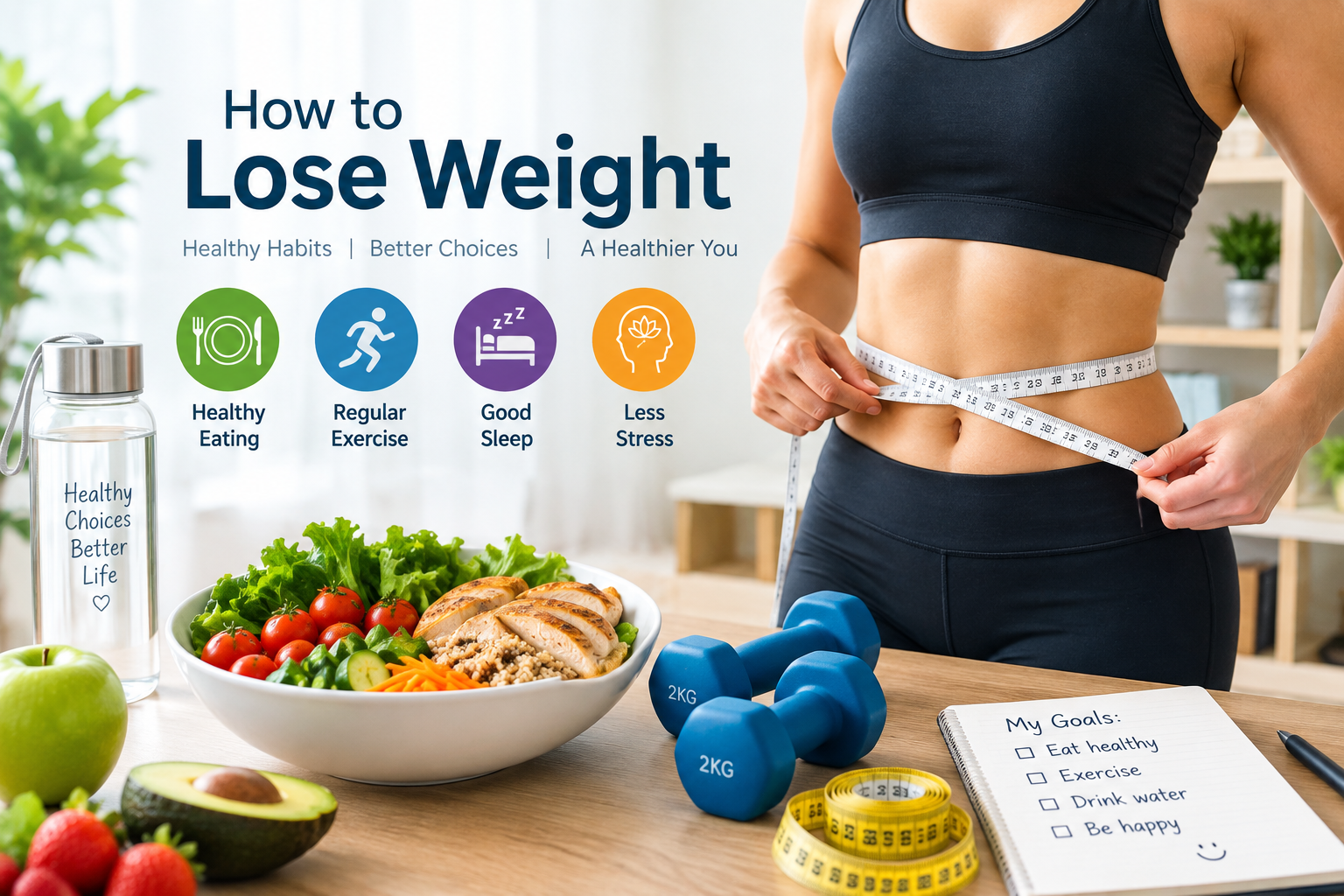
Learning how to lose weight can be confusing because there are many diets, exercise programs, and weight-loss products available online. The safest approach is usually to focus on realistic lifestyle habits rather than extreme diets or promises of rapid results.
Healthy weight management involves more than simply eating less. Your food choices, physical activity, sleep, daily routine, and individual health can all influence your progress. This guide explains practical ways to manage your weight while supporting a balanced and healthy lifestyle.
What Does Healthy Weight Loss Mean?
Healthy weight loss means making sustainable changes that can fit into your normal lifestyle. Instead of looking for a quick solution, it is better to develop habits that you can continue over time.
Everyone is different. Factors such as age, genetics, medications, activity level, health conditions, and eating habits can affect body weight. For this reason, there is no single plan that works for everyone.
A sensible approach focuses on nutritious food, appropriate portions, regular movement, good sleep, and realistic goals.
How to Lose Weight With Healthy Eating Habits
Food plays an important role in weight management. You do not necessarily need to completely remove your favorite foods. Instead, try to create balanced meals and pay attention to portion sizes.
Choose Nutritious Foods
Build meals around a variety of nutritious foods. Depending on your personal dietary needs, these may include:
- Vegetables and fruits
- Whole grains
- Beans and other legumes
- Eggs, fish, poultry, or other protein sources
- Unsweetened or low-fat dairy products when appropriate
- Nuts and seeds in reasonable portions
Eating a variety of foods can help provide important nutrients while making your meals more enjoyable.
Pay Attention to Portion Sizes
Portion size can make a difference even when the food itself is nutritious. Eating very large portions may provide more energy than your body needs.
Try eating slowly and paying attention to hunger and fullness. Using reasonable portions can make healthy eating easier without requiring you to completely avoid particular foods.
Reduce Sugary Drinks
Sugary drinks can add significant amounts of added sugar to your diet. Water is a simple alternative for many people.
You can also choose unsweetened tea or other low-calorie beverages when appropriate. Making small changes to what you drink can be easier than making major changes to your entire diet.
Include Fiber-Rich Foods
Vegetables, fruits, whole grains, and legumes can provide dietary fiber. Including these foods as part of balanced meals can support a nutritious eating pattern.
If you are increasing your fiber intake, do so gradually and drink enough fluids according to your individual needs.
Physical Activity and Weight Management
Regular physical activity can support overall health and help with weight management. You do not have to start with difficult workouts.
Walking, cycling, swimming, dancing, sports, and other activities can all help you become more active.
Start Slowly
If you have not exercised regularly, begin with an activity that feels manageable. You can gradually increase the duration or intensity as your fitness improves.
For example, you might start with short walks and gradually make them longer. The best activity is often one that you enjoy and can perform consistently.
Consider Strength Training
Strength exercises can help maintain and build muscle. Examples include bodyweight exercises, resistance bands, and weight training.
Beginners should focus on proper technique and progress gradually. If you have an injury or health condition, speak with a qualified professional before starting a new exercise program.
Build Healthy Daily Habits
Knowing how to lose weight is only part of the process. Turning healthy choices into regular habits can make them easier to maintain.
Consider these simple habits:
- Plan some meals before the week begins.
- Keep nutritious foods available at home.
- Drink water regularly.
- Take opportunities to walk or move during the day.
- Eat slowly and pay attention to portions.
- Maintain a consistent sleep routine.
- Track habits that you want to improve.
Small changes can be more practical than trying to change everything at once.
Sleep and Stress Can Affect Your Routine
A healthy lifestyle includes more than diet and exercise. Sleep and stress can also affect your daily choices and energy levels.
Try to establish a regular sleep schedule and create a relaxing bedtime routine. Managing everyday stress through activities you enjoy, such as walking, hobbies, social activities, or relaxation techniques, may also help you maintain healthier routines.
If sleep problems or ongoing stress are significantly affecting your health, consider speaking with a healthcare professional.
Common Mistakes to Avoid
Extreme Dieting
Very restrictive diets can be difficult to maintain and may not provide adequate nutrition. Be cautious of plans that require severe food restrictions without a valid medical reason.
Expecting Instant Results
Weight can change from day to day for many reasons. A short-term change on the scale does not necessarily represent long-term progress.
Avoid programs that promise dramatic results in an unusually short period.
Skipping Meals
Skipping meals is not necessary for everyone trying to manage their weight. Some people may become very hungry later and find it harder to make balanced food choices.
A regular eating pattern that fits your lifestyle may be more sustainable.
Depending on Weight-Loss Products
Be careful with pills, teas, supplements, and other products that promise fast weight loss. Some products may have risks, interact with medications, or lack reliable evidence.
Before using a weight-loss supplement, consider discussing it with a healthcare professional.
How to Track Your Progress
The number on a scale is only one possible way to monitor progress. You can also track your habits and overall well-being.
For example, you could record:
- How often you exercise
- How frequently you eat vegetables and fruits
- Your beverage choices
- Your sleep routine
- Your daily activity
- How consistently you follow your healthy habits
Tracking these behaviors can help you identify patterns and make practical adjustments.
Useful Resources for Healthy Weight Management
For reliable health information, it is better to use established medical and public-health sources rather than websites making unrealistic weight-loss promises.
The Centers for Disease Control and Prevention (CDC) provides information about healthy weight, nutrition, and physical activity.
You can learn more from the CDC’s official healthy-weight resources here:
The World Health Organization (WHO) also provides information about healthy diets and physical activity.
You can visit the WHO’s official website here:
World Health Organization – Healthy Diet
These resources can be useful starting points when you want trustworthy general health information.We also have information here about the coffee known as Kopi Luwak; click here to read it. https://kaskeymarketer.com/kopi-luwak-is-a-unique-coffee-known-for-its/
When Should You Speak With a Healthcare Professional?
Weight management can be affected by medical conditions, medications, age, genetics, and other factors.
Consider speaking with a doctor or qualified healthcare professional before making major changes if you have a medical condition, take prescription medications, are pregnant or breastfeeding, have a history of an eating disorder, or are unsure whether a particular diet or exercise plan is appropriate for you.
Professional guidance can help you choose an approach based on your individual circumstances.
Related Articles
If your website already has related articles, add internal links here. For example:
- [INTERNAL LINK: How to Save Money on Healthy Food]
- [INTERNAL LINK: Healthy Lifestyle Tips for Beginners]
- [INTERNAL LINK: Benefits of Regular Exercise]
- [INTERNAL LINK: How to Build Healthy Daily Habits]
Replace each [INTERNAL LINK] with the actual URL of an existing article on your website.
Frequently Asked Questions
How to lose weight safely?
Focus on balanced nutrition, reasonable portions, regular physical activity, adequate sleep, and sustainable daily habits. Avoid extreme diets and unrealistic promises.
Can I lose weight without exercising?
Physical activity provides important health benefits, but weight management involves several factors, including food intake and daily habits. Adding regular movement can support overall health.
Do I need to stop eating carbohydrates to lose weight?
No. Carbohydrates can be part of a balanced diet. Foods such as whole grains, fruits, vegetables, and legumes can provide carbohydrates along with other important nutrients.
How quickly should I expect results?
There is no single rate that is appropriate for everyone. Weight changes vary between individuals and can also fluctuate over time. Be cautious of programs promising dramatic results very quickly.
What is the best diet for weight loss?
There is no single diet that is best for everyone. A suitable eating pattern should provide adequate nutrition and be realistic enough to maintain over time. Individual health needs should also be considered.
Conclusion
Learning how to lose weight is not about finding a perfect diet or following an extreme program. A more practical approach is to build healthy habits that fit your everyday life.
Choose nutritious foods, pay attention to portions, stay physically active, get adequate sleep, and make changes gradually. Most importantly, avoid unrealistic promises and approaches that could put your health at risk.
If you have a medical condition, take medications, or are uncertain about the right approach for you, speak with a qualified healthcare professional. A safe and sustainable routine is more valuable than a quick fix.
[…] These links provide additional information from established health organizations. When adding them to WordPress, use normal links without adding a rel="nofollow" attribute if you want them to remain DoFollow links. Friend, here is the option regarding fat loss; click here to read it. https://kaskeymarketer.com/how-to-lose-weight/ […]