


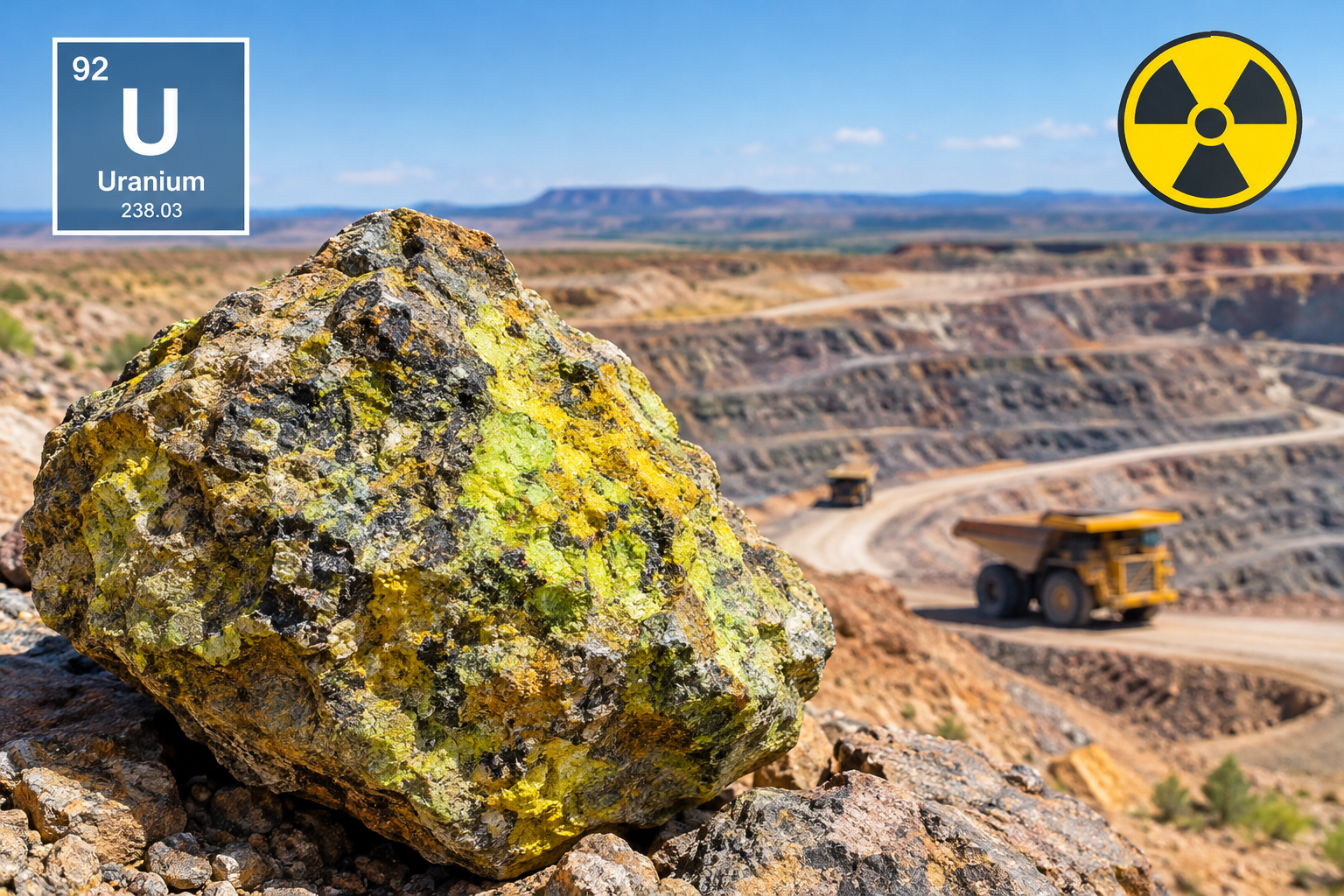
Uranium ore is a naturally occurring rock or mineral deposit containing enough uranium to make its recovery potentially worthwhile under particular economic and technical conditions. It is an important natural resource because uranium can be processed into fuel for nuclear power plants, which generate electricity through nuclear fission.
Although uranium is associated with modern energy production, it is also a subject of geological research, environmental protection, and radiation safety. Understanding this resource means looking beyond its role in electricity generation to consider how deposits form, where they occur, how they are evaluated, and what risks are associated with their extraction.
This guide explains the science behind uranium-bearing rocks, their major uses, the environmental challenges involved, and the importance of responsible management.
What Is Uranium Ore? 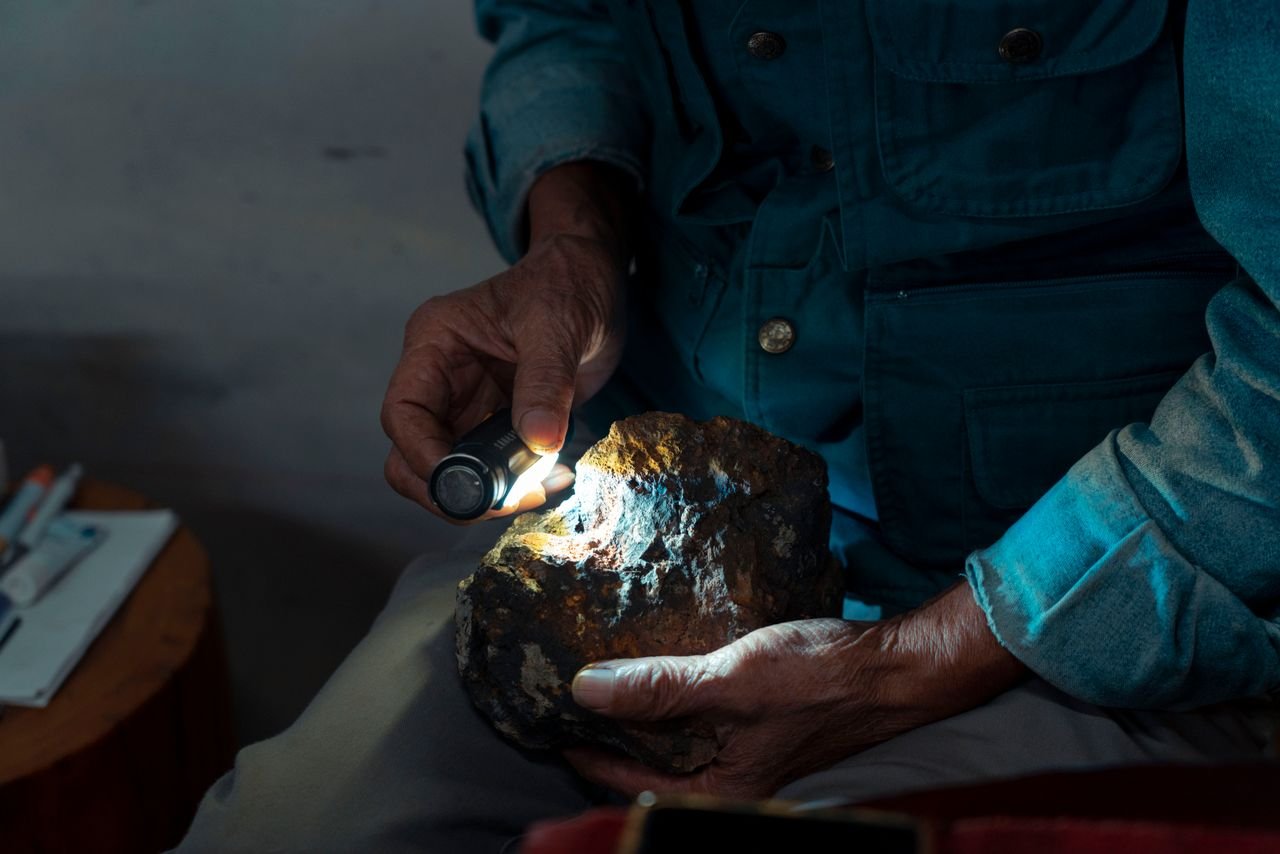
Uranium ore is rock containing uranium minerals in concentrations that may make extraction commercially or technically feasible. Whether a deposit qualifies as ore depends on several factors, including uranium concentration, deposit size, extraction costs, available technology, environmental requirements, and market conditions.
Uranium itself is a naturally occurring chemical element with the symbol U and atomic number 92. It is a heavy, radioactive metal found in small quantities in Earth’s crust and in certain minerals.
The word ore does not describe one specific rock. Instead, it refers to a natural material that can potentially be processed to recover a valuable substance.
For this reason, not every rock containing uranium is considered uranium ore. Some deposits contain too little uranium, are difficult to access, or cannot be developed economically under current conditions.
How Does Uranium Ore Form? 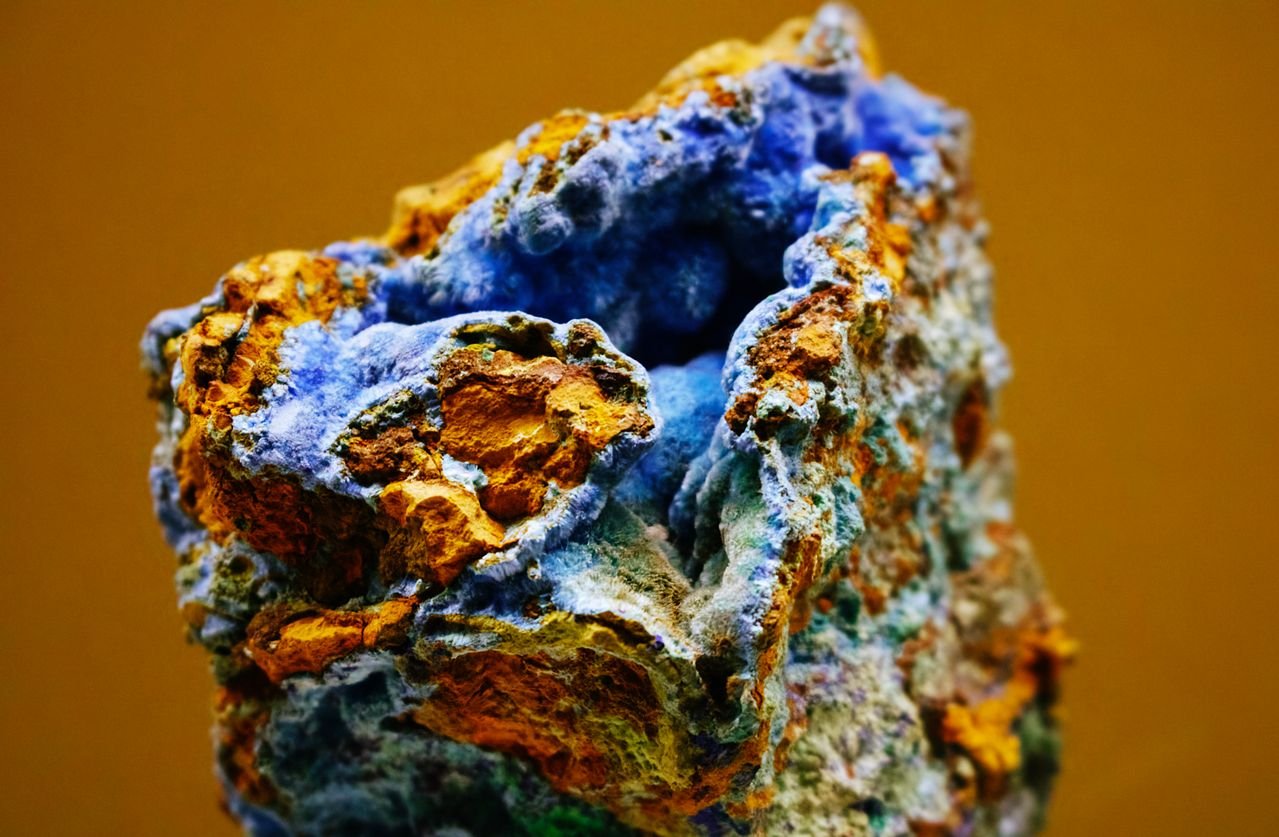
Uranium deposits develop through geological processes operating over long periods. The formation of a deposit depends on the original source of uranium, the movement of fluids through rocks, and the chemical conditions that allow uranium to accumulate.
1. Weathering and the movement of uranium
Uranium can be released from minerals as rocks weather. Under suitable chemical conditions, groundwater may dissolve and transport some of this uranium through surrounding rock formations.
2. Transport through geological formations
Water can carry dissolved uranium through porous sedimentary layers, fractures, and other pathways. The movement of uranium depends on factors such as water chemistry, rock composition, and the presence of other minerals.
3. Concentration into deposits
When environmental and chemical conditions change, uranium may become less soluble and accumulate in particular locations. Over time, these geological processes can produce concentrations that may be suitable for further evaluation as mineral resources.
Not all uranium deposits form in the same way. Some are associated with sedimentary rocks, while others occur in igneous rocks, metamorphic environments, or mineralized veins.
Common Types of Uranium Deposits
Uranium occurs in several geological settings. These categories help geologists understand how deposits formed and how they might be evaluated.
Sandstone-hosted deposits
These deposits occur in sedimentary rocks, particularly sandstone. Groundwater movement and chemical changes can concentrate uranium within certain layers or zones.
Their characteristics vary considerably, and their suitability for extraction depends on the geology, deposit geometry, and environmental conditions.
Unconformity-related deposits
These deposits are associated with geological boundaries between older basement rocks and younger sedimentary formations. Some are known for relatively high uranium concentrations, although individual deposits differ in size and characteristics.
Vein and fracture-related deposits
Uranium minerals can accumulate in fractures and veins where mineral-bearing fluids have moved through rock. Their formation depends on the history of the surrounding rocks and the chemistry of the fluids.
Intrusive-rock-associated deposits
Some uranium deposits are associated with particular igneous rocks, including granitic and related formations. Uranium may occur in minerals distributed throughout the rock or concentrated in specific zones.
These examples demonstrate that uranium resources are geologically diverse. A deposit’s classification alone does not establish whether it can be mined safely or economically.
What Minerals Contain Uranium?
Uranium occurs in several minerals, each with its own chemical composition and geological characteristics.
Uraninite is one of the best-known uranium-bearing minerals. It is generally dark and can contain substantial amounts of uranium.
Coffinite is another uranium mineral that occurs in certain geological environments, including some sedimentary deposits.
Carnotite is a yellow uranium-bearing mineral that also contains vanadium. Its appearance can make it recognizable in some mineral collections and geological settings, although color alone cannot reliably identify a mineral.
Autunite is a uranium-bearing phosphate mineral that can occur in distinctive yellow-green crystals. Its composition and appearance vary with its condition and surrounding environment.
These minerals are scientifically important, but visual identification is not a reliable way to determine uranium content or radiation levels. Proper mineral identification and radiation assessment require suitable instruments and trained professionals.
How Is Uranium Ore Evaluated and Processed?
The development of a uranium deposit involves much more than identifying a uranium-bearing rock. Geological studies, laboratory analysis, environmental assessment, regulatory approval, and economic evaluation all influence whether a project can proceed.
Geological exploration and assessment
Geologists study rock formations and use appropriate survey methods to investigate possible mineral deposits. Samples may be analyzed in laboratories to estimate their composition and understand the distribution of uranium.
Exploration results are then used to assess the deposit’s size, grade, geological characteristics, and potential development challenges.
Mining methods
When a project is approved, the mining method depends on the deposit’s location and characteristics. Some deposits may be developed using underground mining, while others may be suitable for open-pit mining.
In certain suitable geological settings, regulated in-situ recovery methods can extract uranium from underground formations without removing all the surrounding rock. This approach still requires careful control of groundwater and compliance with applicable environmental requirements.
No single method is appropriate for every deposit.
Processing and uranium recovery
At a licensed processing facility, uranium-bearing material may undergo treatment to separate and concentrate uranium compounds. The resulting product is often referred to as yellowcake, a general term for a concentrated uranium product that is commonly converted into other chemical forms during the nuclear fuel cycle.
Yellowcake is not finished nuclear reactor fuel. Additional regulated conversion and fuel-fabrication stages are required before uranium can be used in most commercial nuclear power reactors.
For a general overview, readers can consult the World Nuclear Association, which publishes information about uranium mining and the nuclear fuel cycle.
What Is Uranium Ore Used For?
The most widely recognized use of uranium is in nuclear energy, but the element also has scientific and industrial applications.
Nuclear electricity generation
Certain uranium isotopes can undergo nuclear fission, a process in which an atomic nucleus splits and releases energy. Commercial nuclear reactors use carefully manufactured nuclear fuel to produce heat, which is then used to generate electricity.
The uranium in ore cannot be placed directly into a reactor. It must pass through the appropriate processing and fuel-preparation stages under strict regulatory controls.
Scientific research
Uranium and uranium-bearing minerals are important in geology, mineralogy, nuclear science, and studies of Earth’s history.
Scientists can investigate uranium-bearing materials to learn about geological processes, mineral formation, and the movement of elements through rocks and groundwater.
Dating geological materials
Certain uranium isotopes decay into other elements at predictable rates. By studying suitable uranium-bearing minerals and their decay products, geologists can estimate the ages of some rocks and geological events.
The reliability of a dating result depends on the mineral, the geological history of the sample, and the analytical method used.
Why Is Uranium Important for Energy?
Nuclear power is one application of uranium that receives considerable attention because of its ability to generate large amounts of electricity from relatively small quantities of fuel.
Low operational carbon emissions
Nuclear power plants generally produce very low direct greenhouse gas emissions while generating electricity. However, a complete assessment also considers emissions from mining, construction, fuel processing, plant operation, and decommissioning.
Reliable electricity production
Nuclear plants can operate for extended periods and provide electricity regardless of whether the wind is blowing or the sun is shining. Actual performance depends on plant design, maintenance, fuel availability, and operating conditions.
Energy security considerations
Countries with access to reliable uranium supplies and the infrastructure required for nuclear power may be able to diversify their electricity sources. However, nuclear energy also requires significant investment, skilled personnel, effective regulation, and long-term planning.
These advantages should be considered alongside construction costs, radioactive waste management, water requirements, and other environmental and safety concerns.
Health and Environmental Risks of Uranium Ore
Uranium is radioactive, and uranium-bearing materials must be managed appropriately. The level of risk depends on the material’s composition, exposure conditions, duration, and the route through which exposure occurs.
Radiation exposure
Uranium and its decay products emit ionizing radiation. Exposure depends on factors such as the material’s activity, distance, shielding, and whether radioactive substances enter the body.
The radiation characteristics of a sample cannot be determined reliably from its appearance alone.
Chemical toxicity
Uranium also presents a chemical hazard. If sufficient uranium enters the body, its chemical toxicity can affect the kidneys. The potential health effects depend on the amount, chemical form, and route of exposure.
Radon and mine ventilation
Some uranium deposits contain radium, which can produce radon gas as it decays. Radon can accumulate in enclosed or poorly ventilated spaces and presents an inhalation risk.
Appropriate monitoring, ventilation, and occupational safety measures are therefore important in relevant mining environments.
Water and soil contamination
Mining and processing can generate waste rock, tailings, and other materials that require careful management. If uranium or associated contaminants enter groundwater, rivers, or soil, they may create long-term environmental problems.
Responsible projects use environmental monitoring, engineered containment where appropriate, water-management systems, and rehabilitation plans to reduce these risks.
Safe handling
Uranium-bearing rocks and minerals should not be crushed, ground, or processed casually. Dust and contaminated particles can be inhaled or ingested, and some specimens may have elevated radiation levels.
People who encounter a suspected uranium-bearing sample should avoid creating dust, minimize unnecessary handling, keep it away from food and living areas, and seek guidance from a qualified radiation-safety professional or relevant authority when appropriate.
Uranium Ore Compared With Other Energy Resources
Uranium ore differs from fossil fuels and renewable energy resources in its physical properties, energy-conversion process, and environmental considerations.
Uranium ore: A mineral resource used to produce uranium compounds that can eventually become nuclear fuel. Its development requires radiation protection, specialized processing, and radioactive-waste management.
Coal: A fossil fuel burned to produce heat and electricity. Its use releases carbon dioxide and can generate air pollutants and solid waste.
Natural gas: A fossil fuel commonly used for electricity generation, heating, and industrial applications. Burning it produces carbon dioxide, while methane leakage can add to its climate impact.
Solar and wind energy: Renewable resources that generate electricity without burning fuel during operation. Their output varies with weather and local conditions, and their systems require equipment, land or space, and supporting electricity infrastructure.
Each resource has different costs, benefits, and limitations. A fair comparison considers the entire life cycle, including construction, fuel supply, emissions, waste, reliability, and environmental effects.
The Future of Uranium Resources
The future of uranium depends on electricity demand, nuclear energy policy, reactor technology, mining costs, environmental standards, and the availability of economically recoverable resources.
Countries considering nuclear power must assess their energy needs and the financial, technical, environmental, and regulatory requirements of the entire nuclear fuel cycle.
Improved geological knowledge and responsible resource management can support better decisions, but they do not eliminate the risks associated with radioactive materials or guarantee that every known deposit will be commercially viable.
For current information about uranium resources and nuclear energy, consult organizations such as the International Atomic Energy Agency (IAEA) and the OECD Nuclear Energy Agency (NEA).
Frequently Asked Questions About Uranium Ore
1. What is uranium ore in simple terms?
Uranium ore is rock containing uranium minerals in quantities that may make uranium recovery worthwhile. Not every uranium-bearing rock is economically mineable.
2. What does uranium ore look like?
It can vary in appearance depending on the minerals and surrounding rock. Some uranium-bearing minerals are dark, while others may be yellow or greenish. Appearance alone cannot confirm uranium content or radiation levels.
3. Is uranium ore used directly in nuclear power plants?
No. Uranium-bearing material must undergo regulated extraction, processing, and other fuel-cycle stages before suitable uranium fuel can be manufactured for most commercial reactors.
4. Is uranium ore dangerous to humans?
It can present radiation and chemical hazards. Risk depends on the material and the nature of exposure. Dust inhalation, ingestion, and certain workplace exposures require particular care.
5. Where is uranium ore found?
Uranium deposits occur in different geological environments around the world, including sedimentary formations, igneous rocks, and mineralized structures. The presence of a deposit does not necessarily mean it can be developed economically or safely.
Conclusion
Uranium ore is an important geological resource because it can supply uranium for nuclear energy and support scientific research. Its formation involves complex geological processes, and its deposits vary widely in composition, location, and potential economic value.
Understanding this resource also means recognizing its limitations. Uranium exploration and production require technical expertise, regulatory oversight, radiation protection, and responsible management of waste, water, and surrounding ecosystems.
By considering both its potential uses and its environmental and safety challenges, readers can develop a more balanced understanding of uranium ore and its role in modern energy systems.
Friends, here you can read an important topic on how to save money; please click the link below to read it.. https://kaskeymarketer.com/?p=1256&preview=true